

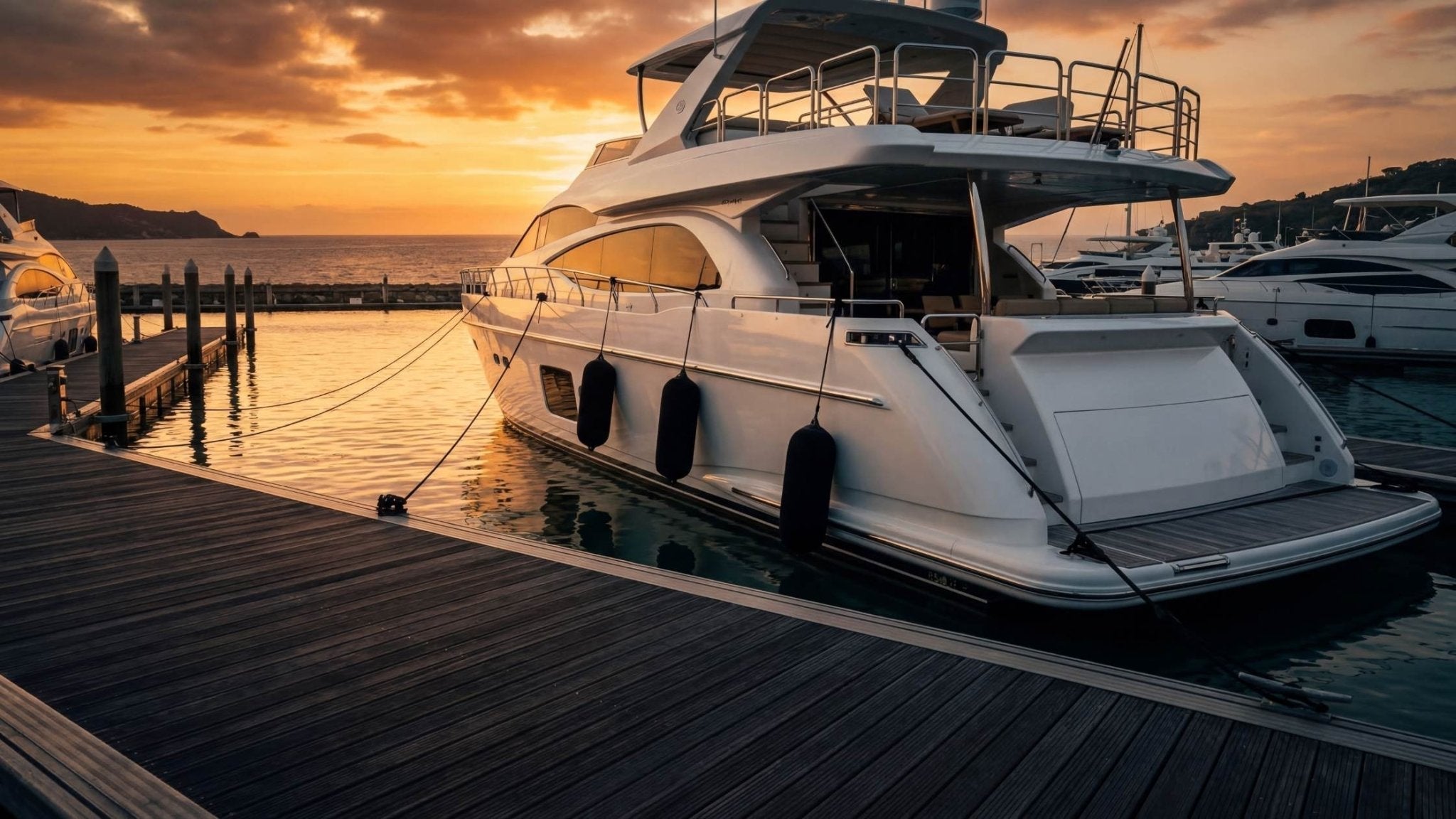
You didn't notice it at first.
Maybe it was the light — that flat midday glare that hides everything. But one afternoon, standing on the dock looking back at your hull, you saw them. Faint horizontal marks just above the waterline. A dull streak running along the port side. Gelcoat that used to catch the sun now sitting matte and tired.
Nothing catastrophic. Just… different from last season.
That's how hull damage works. It rarely announces itself. It builds quietly — through dozens of dockings, hundreds of tide cycles, and every wash-down done with the wrong gear. By the time it's visible, the work is already done. A professional gelcoat restoration on a 50-foot yacht runs anywhere from $1,500 to $6,000. Major damage — crazing or exposed laminate — can push well past $10,000.
Here's what most owners get wrong: they treat hull protection as a single problem. Buy fenders. Done. But three distinct damage types are working against your boat simultaneously — and each one needs a different answer.
Impact Damage: What Fenders Actually Do (And Where Most Owners Go Wrong)

Every docking is a controlled collision. The hull meets the dock, energy transfers, and something absorbs it. That something is supposed to be your fenders — not your gelcoat.
In practice, most yachts are underfendered, sized incorrectly, or hung at the wrong height. A fender undersized for your vessel's displacement doesn't fail dramatically — it just stops working at the moment it matters. A fender hung too high leaves your maximum beam exposed during a surge. A cheap PVC cylinder cracks after two seasons and gets replaced, repeatedly, at a cost that adds up fast.
The right fender setup depends on your vessel's length and your marina environment. Sizing up is always the right call in busy marinas with regular wake, or when rafting with another vessel.
Quick sizing reference:
| Vessel Length | Fender Diameter | Minimum Count |
Placement Guide |
|---|---|---|---|
| Up to 45 ft | 10" | 3–4 fenders | One at beam each side, one forward, one aft |
| 45–65 ft | 12" | 4–6 fenders | Size up for busy marinas with regular wake or when rafting |
| 65–100 ft | 18" | 6–8 fenders | Add fenders at quarters; double up on the exposure side in tight slips |
| 100+ ft | 24" | 8+ fenders | Custom placement by hull profile; consult marina for slip-specific requirements |
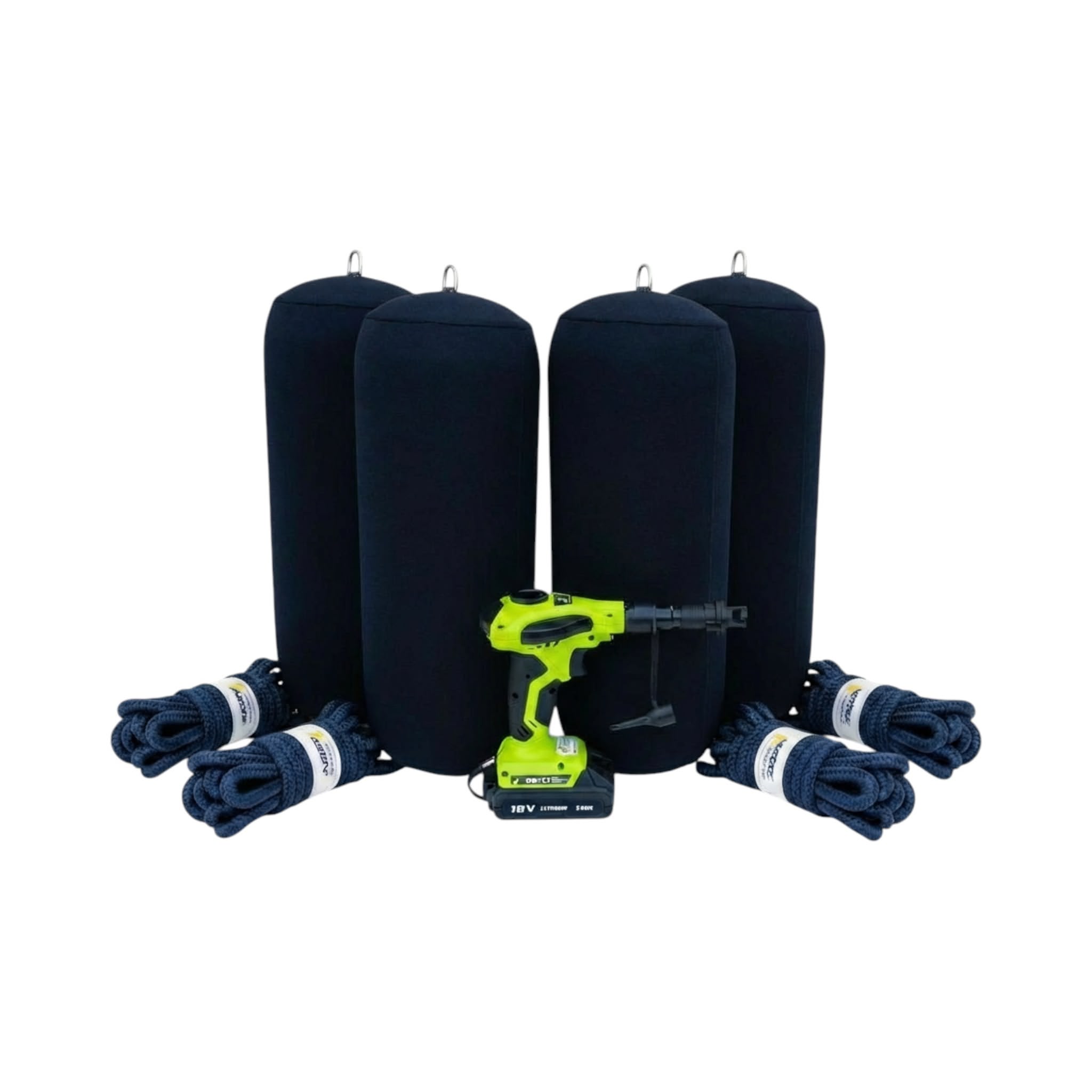
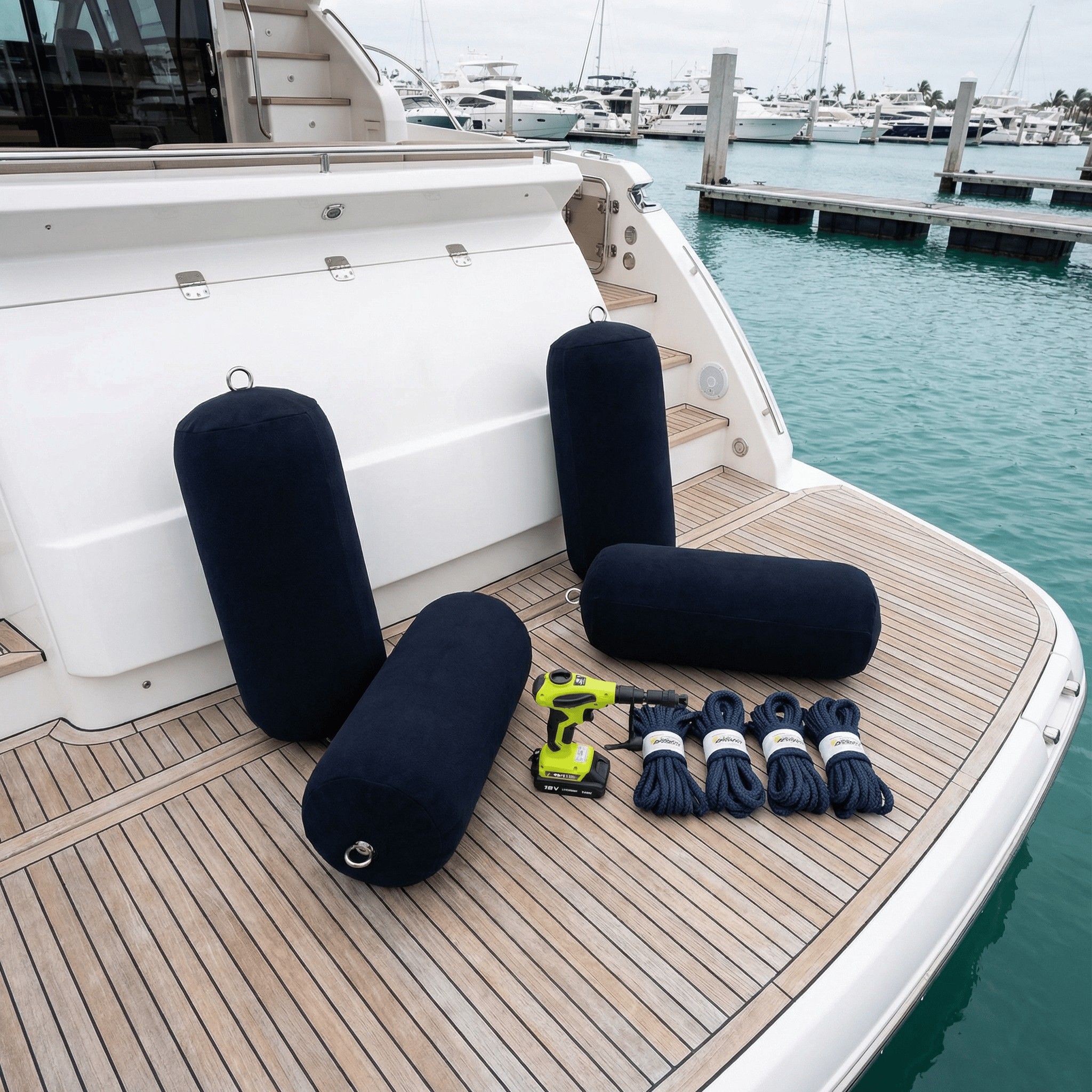
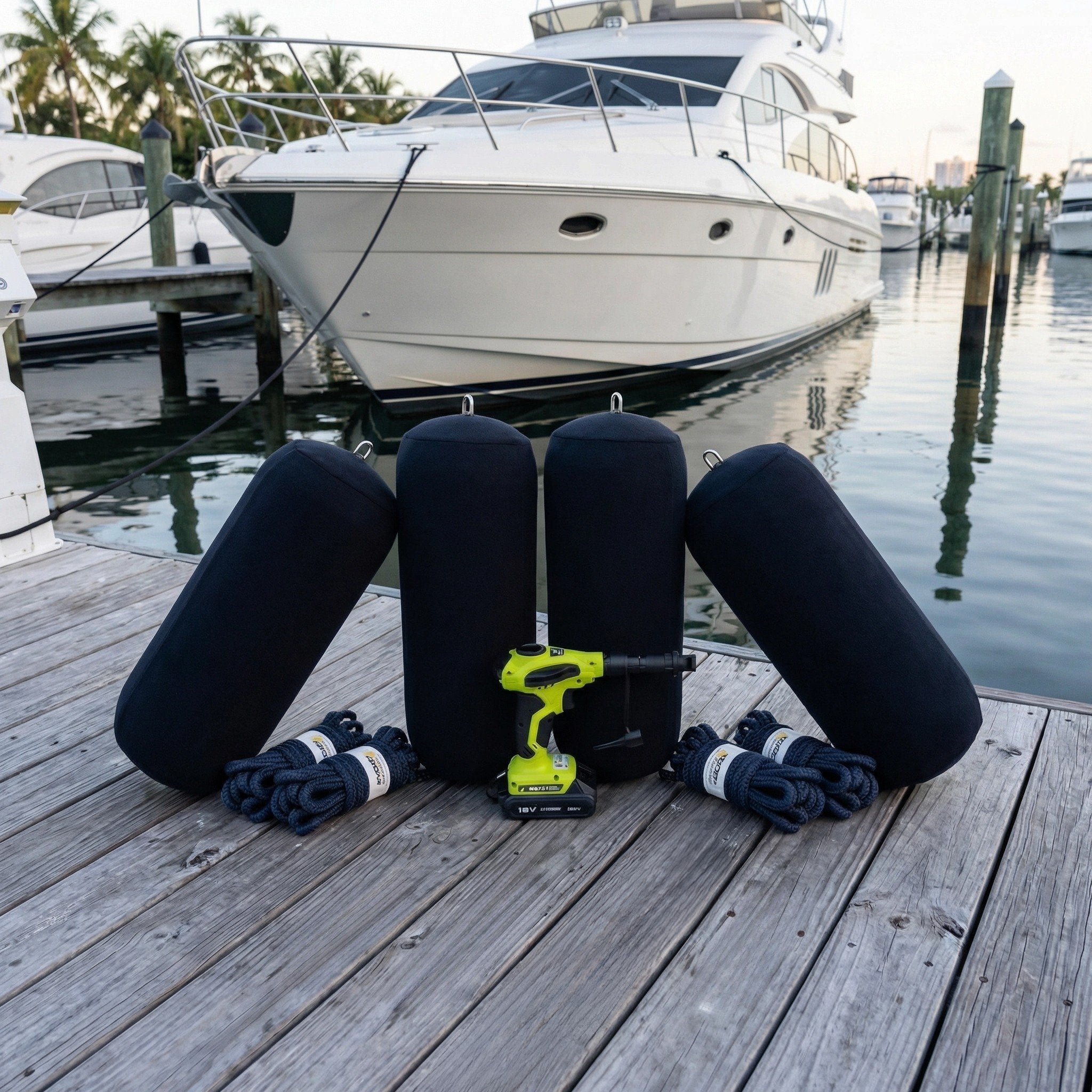
What separates a professional fender setup from a hardware-store one is construction. AERÉ's inflatable fenders are built from reinforced urethane laminate and drop-stitch fabric — the same materials used in military and professional-grade inflatables. Fully inflated, they handle up to 30 PSI of internal pressure and tensile loads exceeding 2,000 pounds. Deflated, they roll down to almost nothing and stow in a cockpit locker without the bulk of a traditional fender.
Here's what that means in practice: a rigid cylindrical fender sits at a fixed contact point. An inflatable compresses and distributes force across a wider surface area — which is what prevents point-load damage to gelcoat during surge and wake. It adjusts in a way solid foam simply can't.
Two accessories most owners overlook: neoprene fender covers and double-braid nylon lines. The covers — AERÉ's Fenda-Sox — add a soft outer layer that eliminates scuff marks from fender movement and protect the fender from UV degradation. The lines matter because cheap braided rope stretches and slips. When current shifts your boat overnight, a fender with worn lines drifts away from the contact zone. Double-braid holds position through tidal shifts and morning wakes without resetting.
AERÉ's 18V lithium battery inflator pressurizes a full set of fenders in under six minutes. No hand pump, no scrambling before you reach the slip.
Pile Abrasion: What the Tide Does to Your Hull Overnight

Here's the damage that doesn't come from docking. It comes from being docked.
If your slip has pilings — and most do — your hull is in contact with them for hours at a time. Not a hard impact. Just a slow, persistent grind as the tide rises and falls and your boat drifts laterally with every wake and wind shift. Over weeks and months, that friction carves marks into your hull that no fender prevents, because the pilings contact a section of hull your fenders aren't covering.
These marks look different from impact damage. They're vertical — thin parallel lines running down the hull side, sometimes cutting through wax to bare gelcoat or primer below. They appear gradually, which is why most owners don't connect them to the pilings until they're already significant.
The fix isn't more fenders. It's a different category of gear: pile pads.
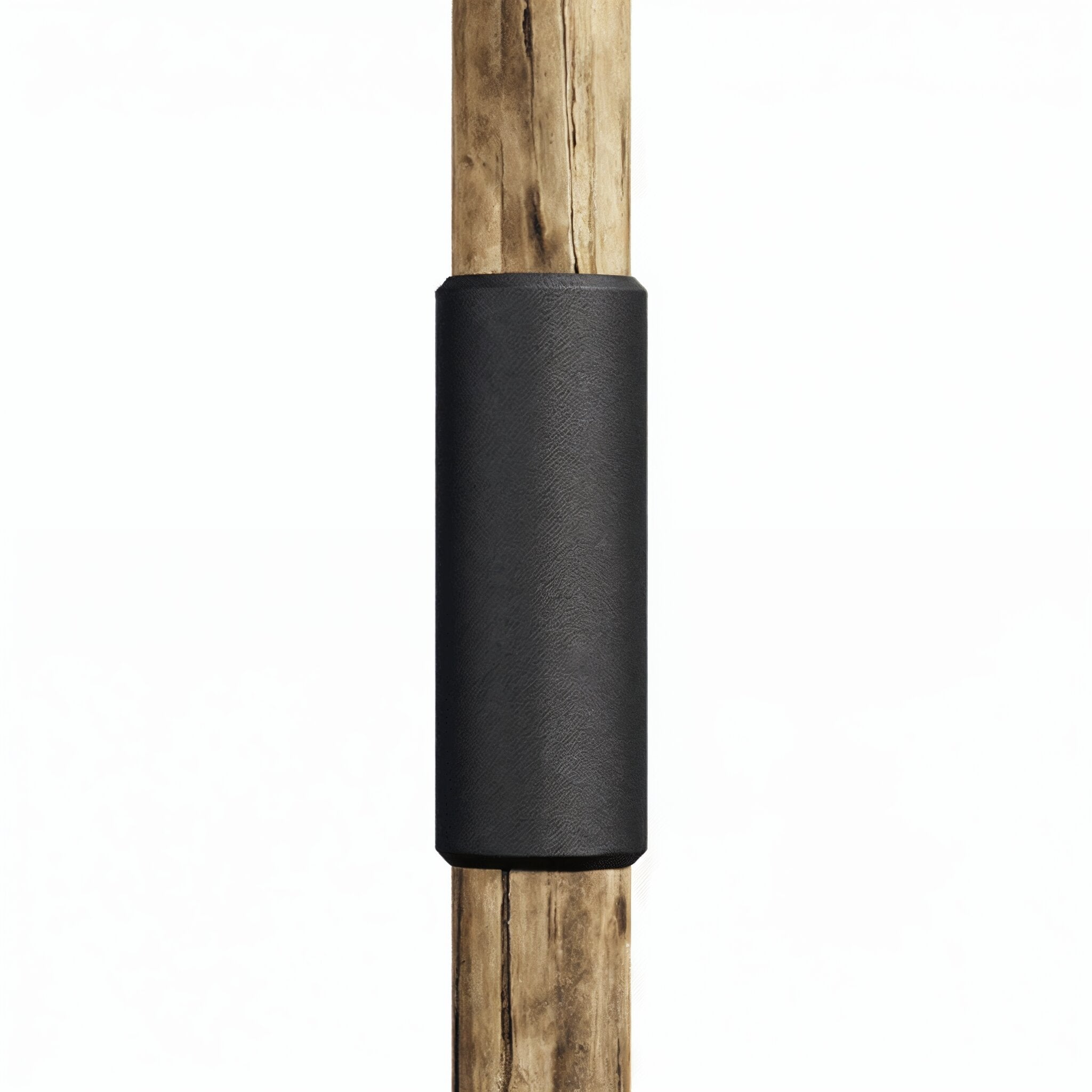
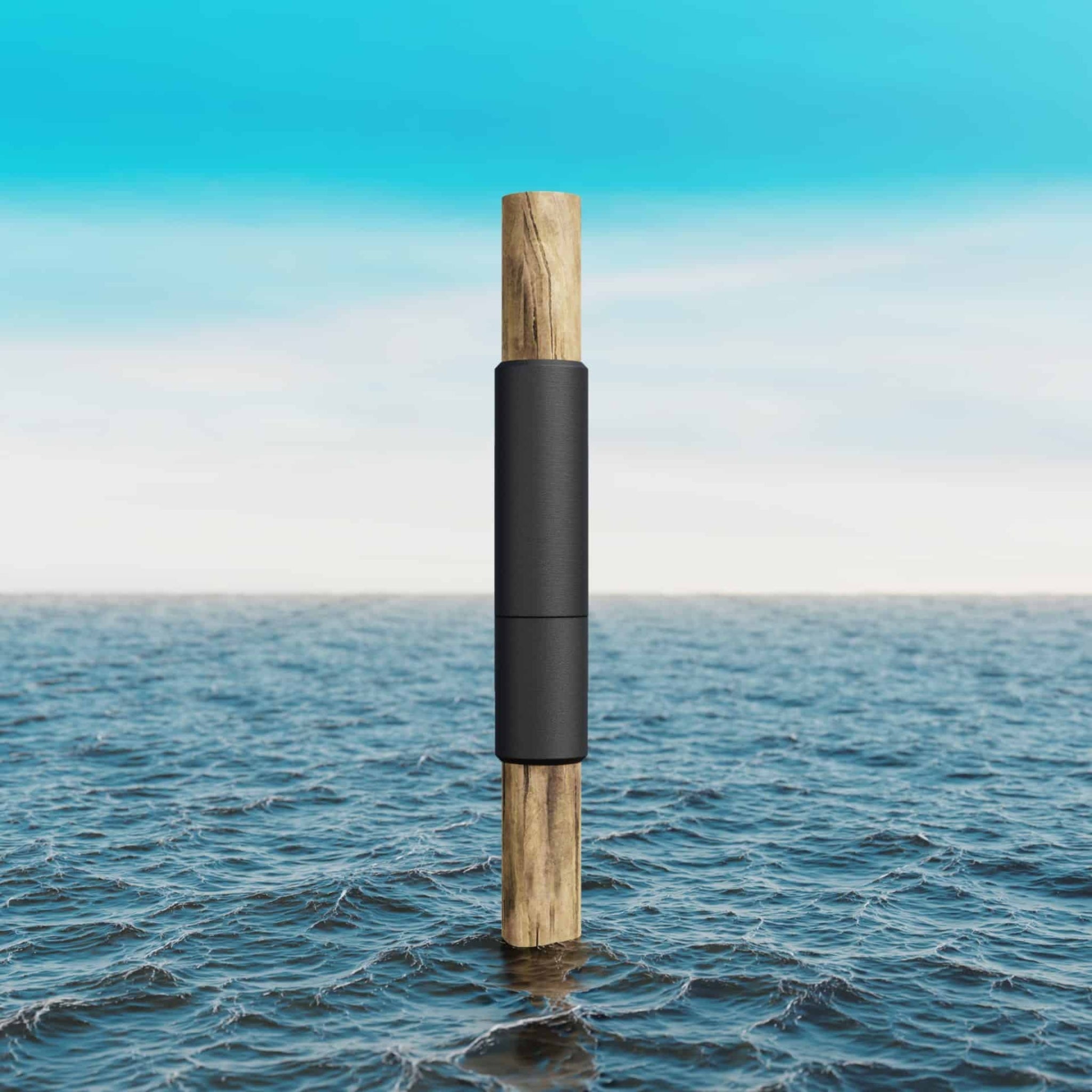
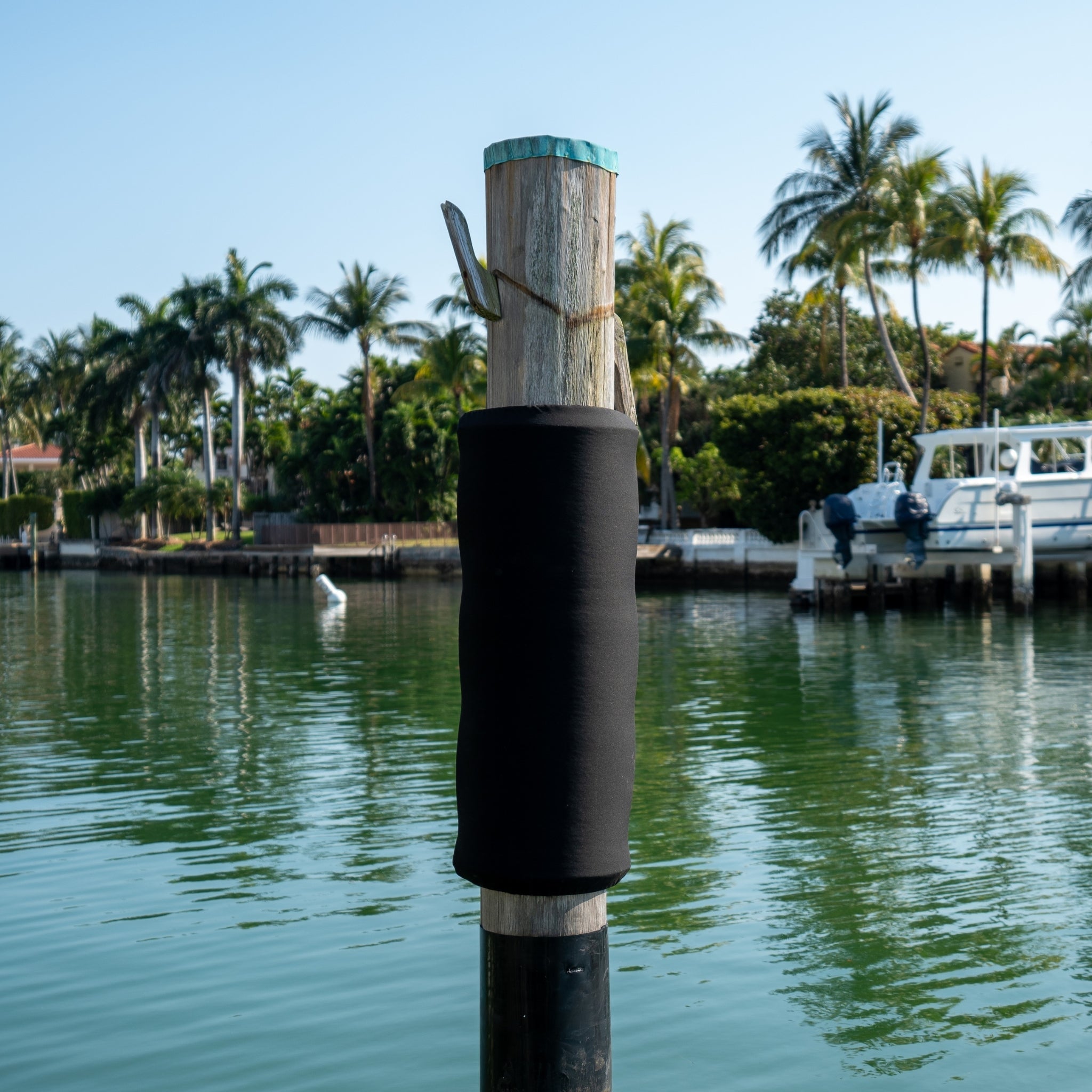
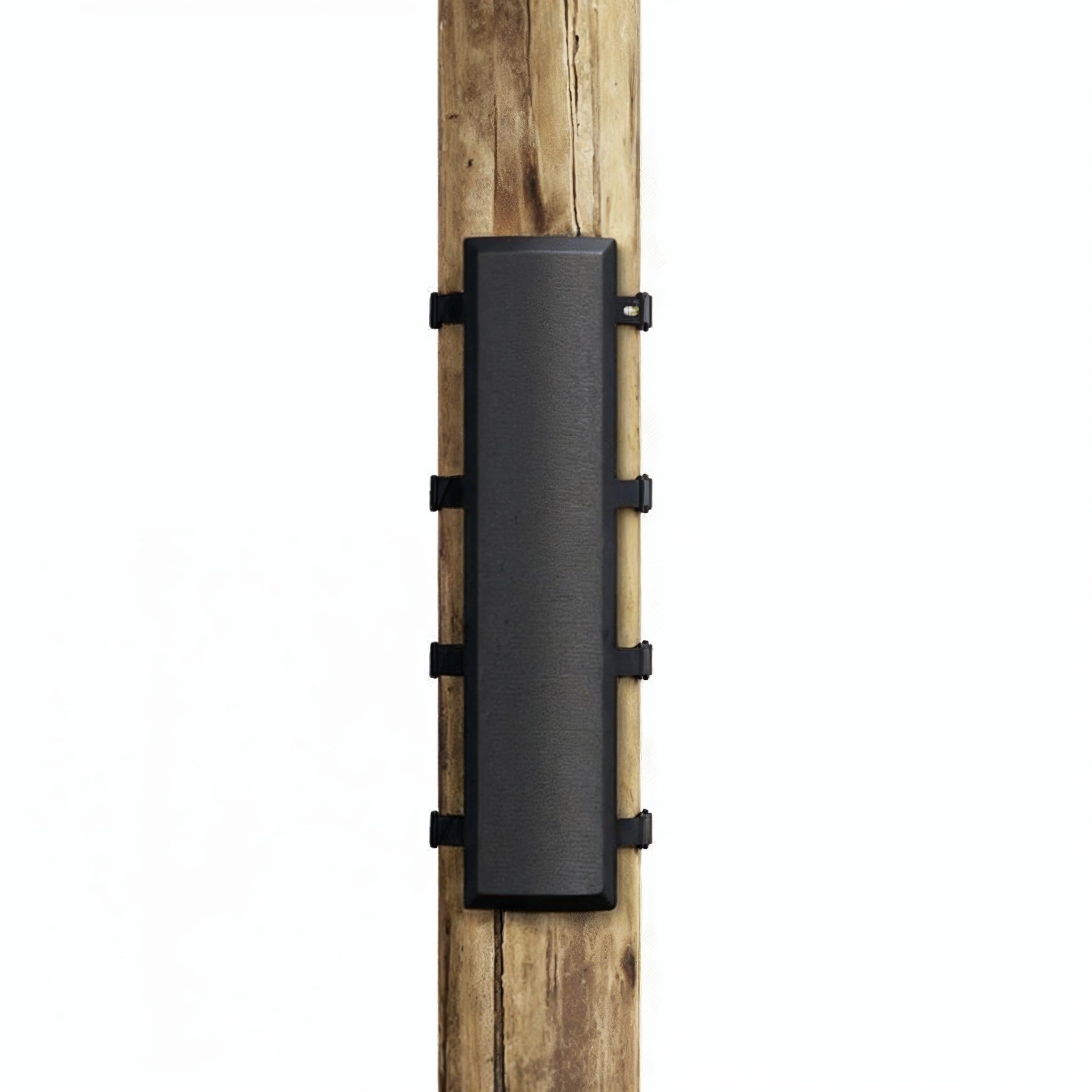
A pile pad attaches directly to the piling — not to your boat — and creates a cushioned buffer between the piling and your hull. When the tide moves your vessel up and down, it slides against the pad instead of bare wood or concrete. No friction, no marks.
PilePad XL is built for standard commercial marina pilings: 27 inches wide, 48 inches tall, 2 inches of impact-absorbing cushioning, secured with four heavy-duty straps. The UV-resistant outer shell holds up through seasons of saltwater exposure without cracking or slipping down the piling. For narrower residential docks, private piers, and finger piers, PilePad Mid offers 15-inch precision coverage with the same 48-inch height and 2-inch cushioning.
That 48-inch height covers tidal ranges up to 4 feet — which accounts for the majority of US coastal marinas without any adjustment. For areas with larger swings — parts of the Pacific Northwest, the coast of Maine, or anywhere with a consistent range beyond 4 feet — extension links add vertical coverage without replacing the core unit.
One note: if your marina uses floating docks that rise and fall with the tide, pile pads may not apply — the contact dynamics are different. Look at your hull after a full tidal cycle. The marks will tell you what's causing them.
Surface Degradation: What Every Wash-Down Is Doing to Your Gelcoat

The third damage type has nothing to do with contact. It comes from the bucket.
Gelcoat — the outer surface layer of a fiberglass hull — looks tough. It isn't forgiving. It doesn't tolerate harsh detergents, stiff bristles, or being scrubbed with the wrong tool for the surface type. Every improper wash removes a microscopic layer of the coating and the protective wax above it. Do this repeatedly and the finish that once threw water off like glass starts to look chalky, oxidized, and dull.
The damage is cumulative and invisible until it isn't. Then it's a detail job — or worse, a respray.
The problem isn't washing the boat. The problem is washing it with gear built for anything except a yacht. Regular dish soap is alkaline enough to strip the protective wax layer you paid to apply. A stiff hardware store brush creates micro-scratches on gelcoat that scatter light and kill the shine. Using the same mop on your non-skid deck and your hull sides transfers abrasive grit between them. One of those surfaces can't handle it.
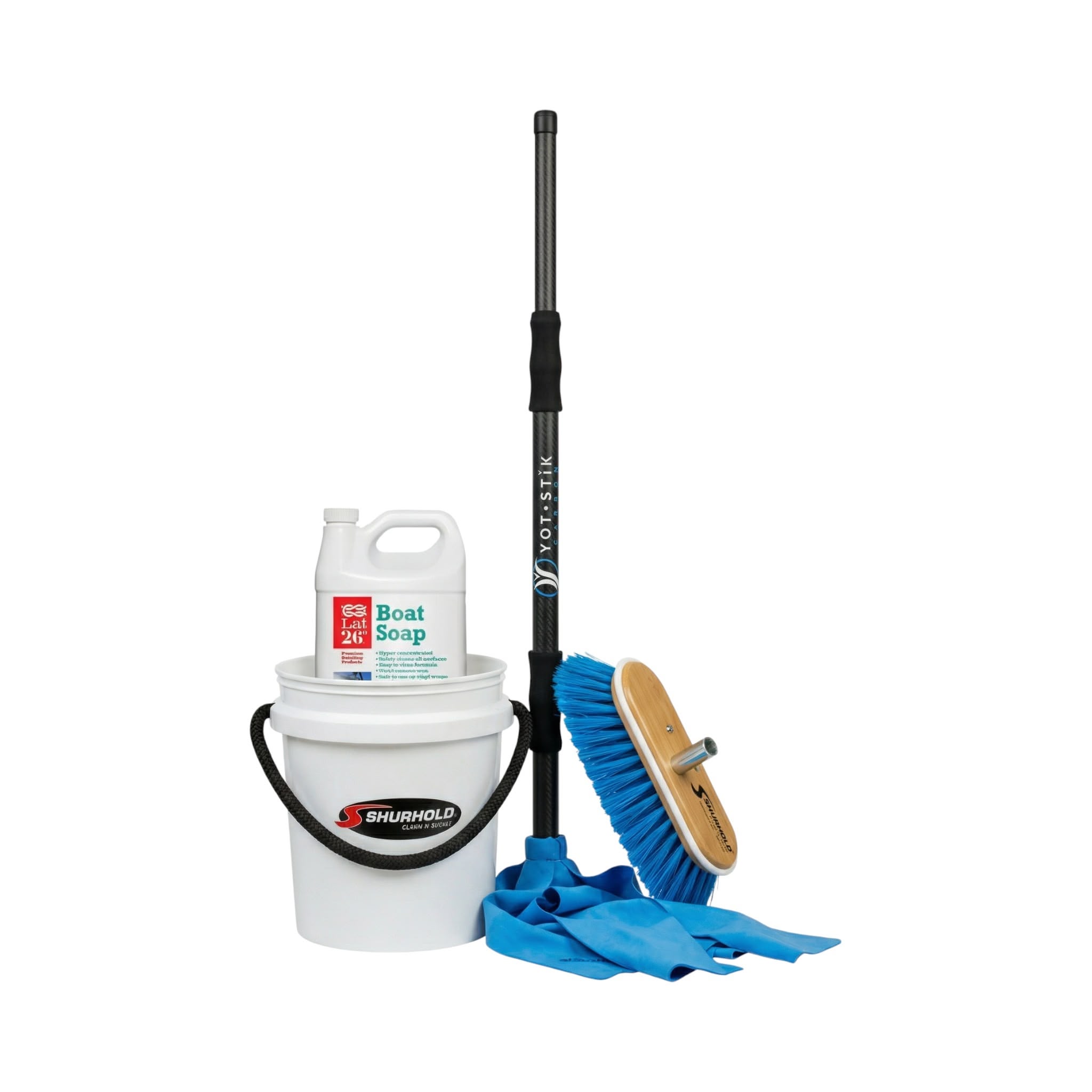
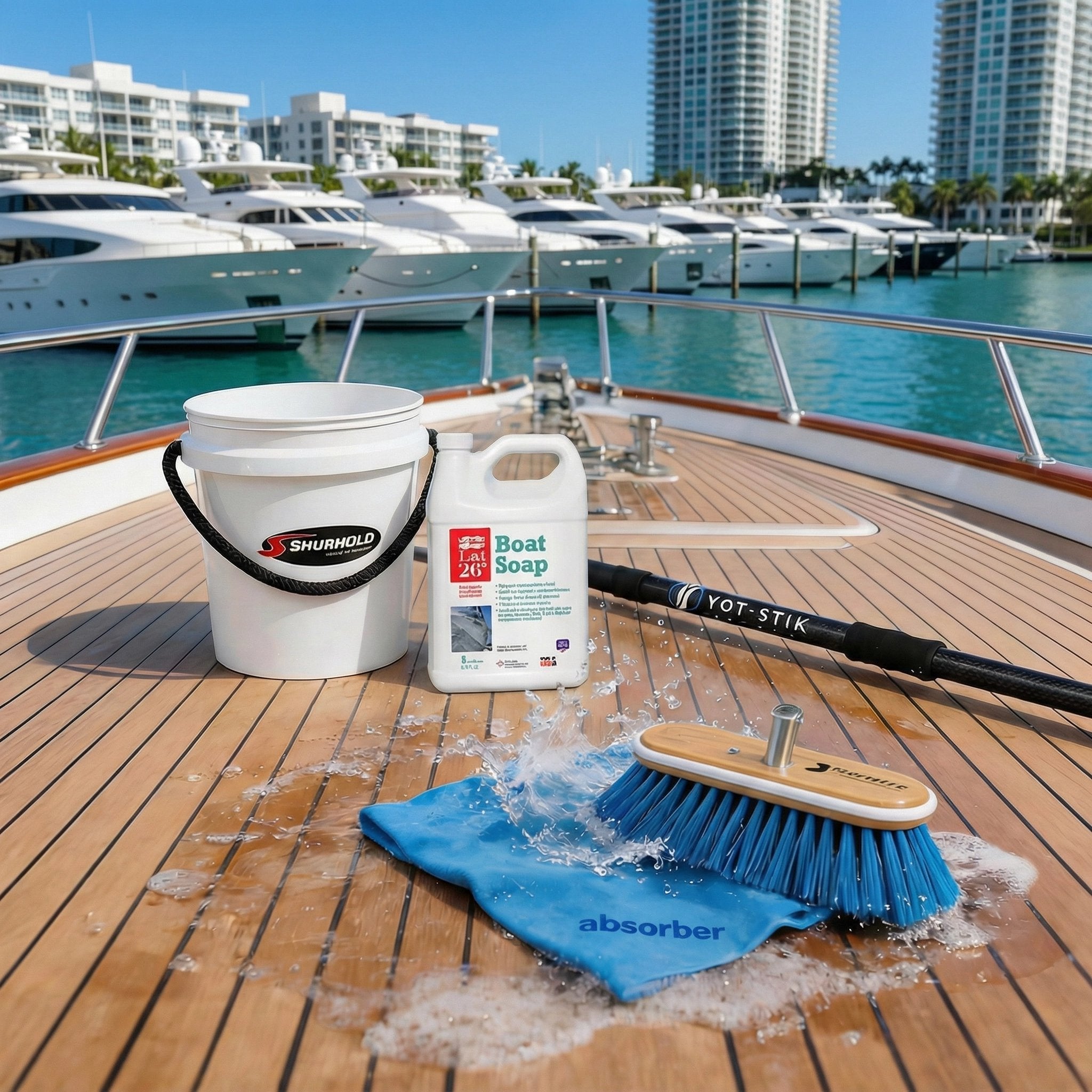
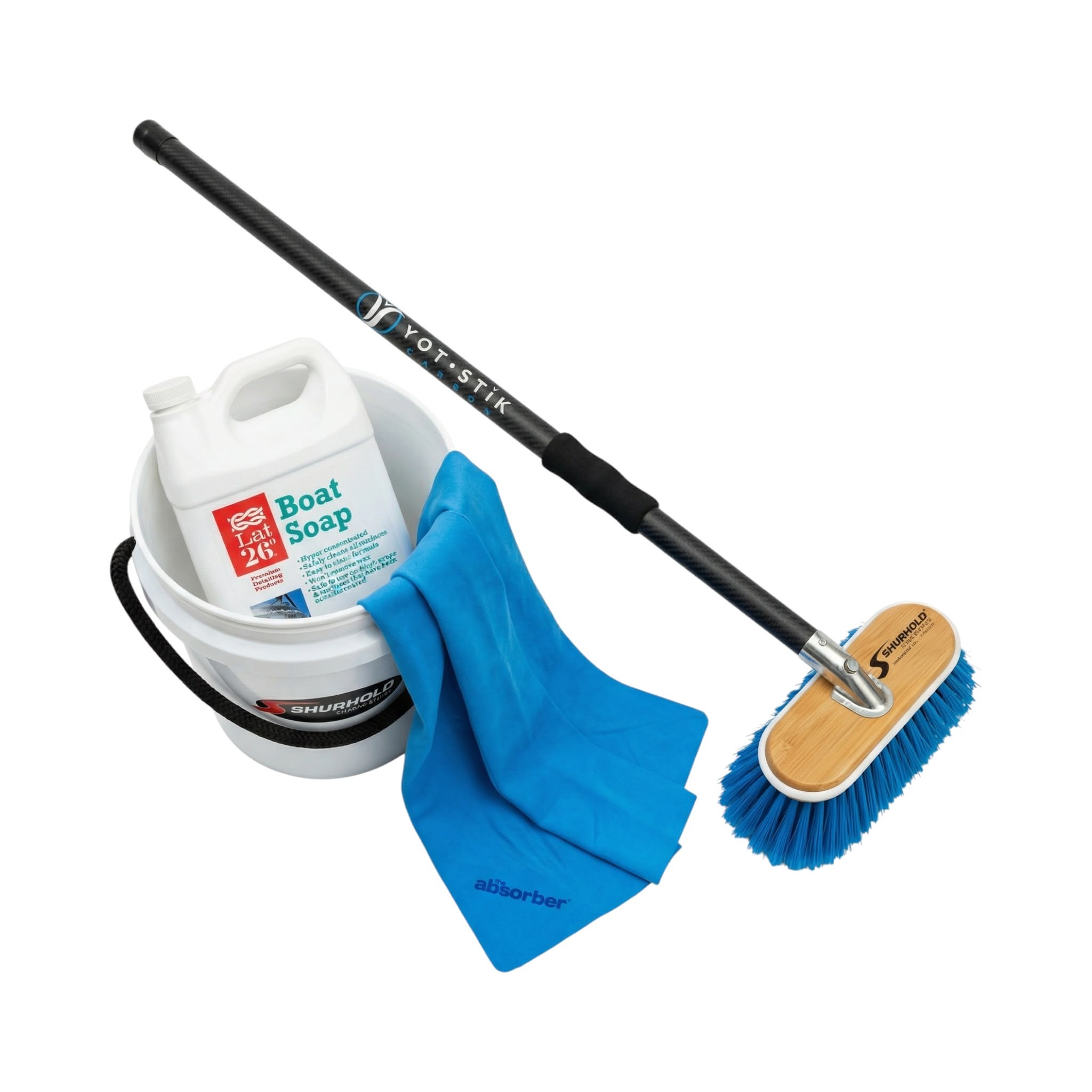
A proper marine wash kit matches the tool to the surface:
- Shurhold 6" Extra Soft Deck Brush — for non-skid areas and gelcoat. Soft enough to clean without scratching, firm enough to lift salt and embedded grime.
- YotMop Shammy Mop — for smooth painted hull sides, where bristle contact risks micro-abrasion.
- Yot Stik Carbon Fiber Telescoping Pole (48–74") — reaches across the beam and down to the waterline without crew hanging over the side.
- Shurhold 5-Gallon Heavy-Duty Bucket (included in Essential Boat Cleaning System) — sized for two-bucket washing. Separate wash and rinse solutions, no cross-contamination.
- Lat 26° Marine-Grade Boat Soap (1 Gallon) — hyper-concentrated formula, one gallon yields up to 128 wash buckets. pH-balanced to clean without stripping wax or ceramic coatings.
That last point is the one most people skip. The pH difference between marine-grade soap and a generic household cleaner determines whether your protective coatings survive the wash or come off with it. Every wax application and ceramic coating you've paid for is only as durable as the soap that touches it afterward.
The method is simple: shammy mop for smooth hull sides, soft brush for non-skid, marine soap throughout. Most owners aren't doing all three — and their gelcoat is paying for it slowly.
How the Three Systems Work Together — And Where to Start

Each damage type has its own window.
Impact damage happens in the minutes you're maneuvering into the slip. Pile abrasion happens in the hours and days after — during tidal cycles when your hull drifts against fixed pilings. Surface degradation happens during maintenance, driven by the products and tools you reach for.
These windows don't overlap, which means none of the solutions replaces the others. A hull protected against all three looks better, holds its value longer, and spends less time in the yard than one protected against just one.
You don't have to build the full system at once. Start where your risk is highest:
- Frequent docking in a tight marina slip with regular wake? Start with the fender system.
- Tidal area with wood or concrete pilings where your hull makes overnight contact? PilePads first.
- Full-time saltwater environment or prepping for charter season? The cleaning system pays for itself quickly in avoided detailing costs.
The systems complement each other — fenders handle active docking, pile pads cover overnight tidal movement, the cleaning system maintains surfaces over the long term. But each works independently too. Most owners start with one and add the others as they learn what their specific slip actually demands.
Start with your biggest risk. Then expand.
The most expensive repair is always the one that could have been prevented. You're either protecting your hull or paying someone to fix it.
Protection isn't complicated. It just needs to be systematic.





Share:
Yacht Days Just Got Better: The Coolest Water Toys to Impress Everyone
The Cost of Waiting: A Five-Year Yacht Management Case Study